Showing posts with label restaurants. Show all posts

Tuesday, February 21, 2012

Hey Toots! Look at Henry & Oscar's!

It's a deliberately retro spot that's been born, after an eight-month buildout, at the corner of Fourth & Vine in Belltown. Mark and Katie Stern, the owners of the Big Picture cinema three blocks down the street, have recreated, at Henry & Oscar's, the atmosphere of a mid-Manhattan lounge.

The bar now takes up what used to be the main room at Shallots, long, narrow, lots of windows. At Shallots, the tiny bar was an afterthought; here, it could be the main event, like the saloons back in Noo Yawk. No accident. Mark Stern's grandfathers, named Henry and Oscar, were in showbiz, and the concept was to emulate Toots Shor's legendary sports and showbiz hangout on West 51st St.

(Those were the days! El Morocco, the Stork Club, the 21 Club! Joe DiMaggio, Frank Sinatra! Toots sold the place at the end of the 1950's, reopened down the street a year later, and eventually got closed down for non-payment of taxes.)

What you don't see from the bar is the rest of the restaurant, down the hall, swanky seating with private booths as well as large tables. One is labelled The Chairman, another The Godfather.

Happy Hour prosecco is five bucks, the fried calamari a notch over six, a colorful Chicago hot dog four. There's a decidedly old-fashioned beef stroganoff on the dinner menu for 18 simoleons, and if you've got a fat roll of bills in your pocket, you might want to go for the filet mignon or the ribeye. The exec chef is Mark Wadhwani, a veteran of Ruth's Chris, the steakhouse chain that's good at relieving diners of their benjamins.

Lots more pictures on Eater.
 
Henry & Oscar's, 2525 4th Avenue, Seattle, (206) 448-2444

Wednesday, October 12, 2011

Decant Take The Bubbles With You

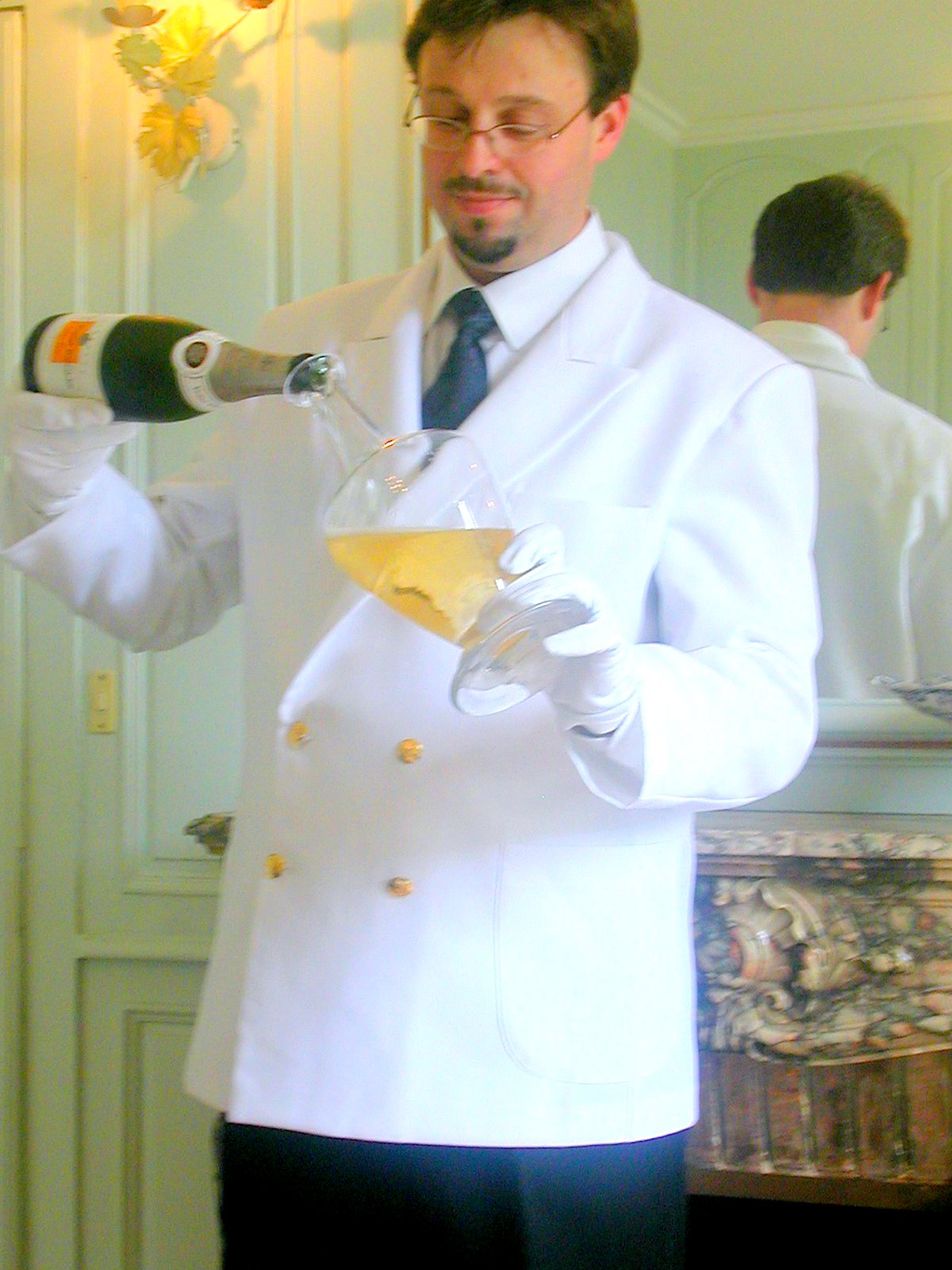
Decanting the Rich Reserve at Veuve Clicquot1.JPG
Decanting Veuve Clicquot's Rich Reserve, France 2007

The bubbles, that is. In some Champagnes, they're what you want. Why else bother? But sometimes, you want fewer bubbles.

Here's Sam Sifton, outgoing (and out-going) restaurant critic for the New York Times, on decanting a brut rosé at Per Se. He's skeptical, but the sommelier knows what she's doing.

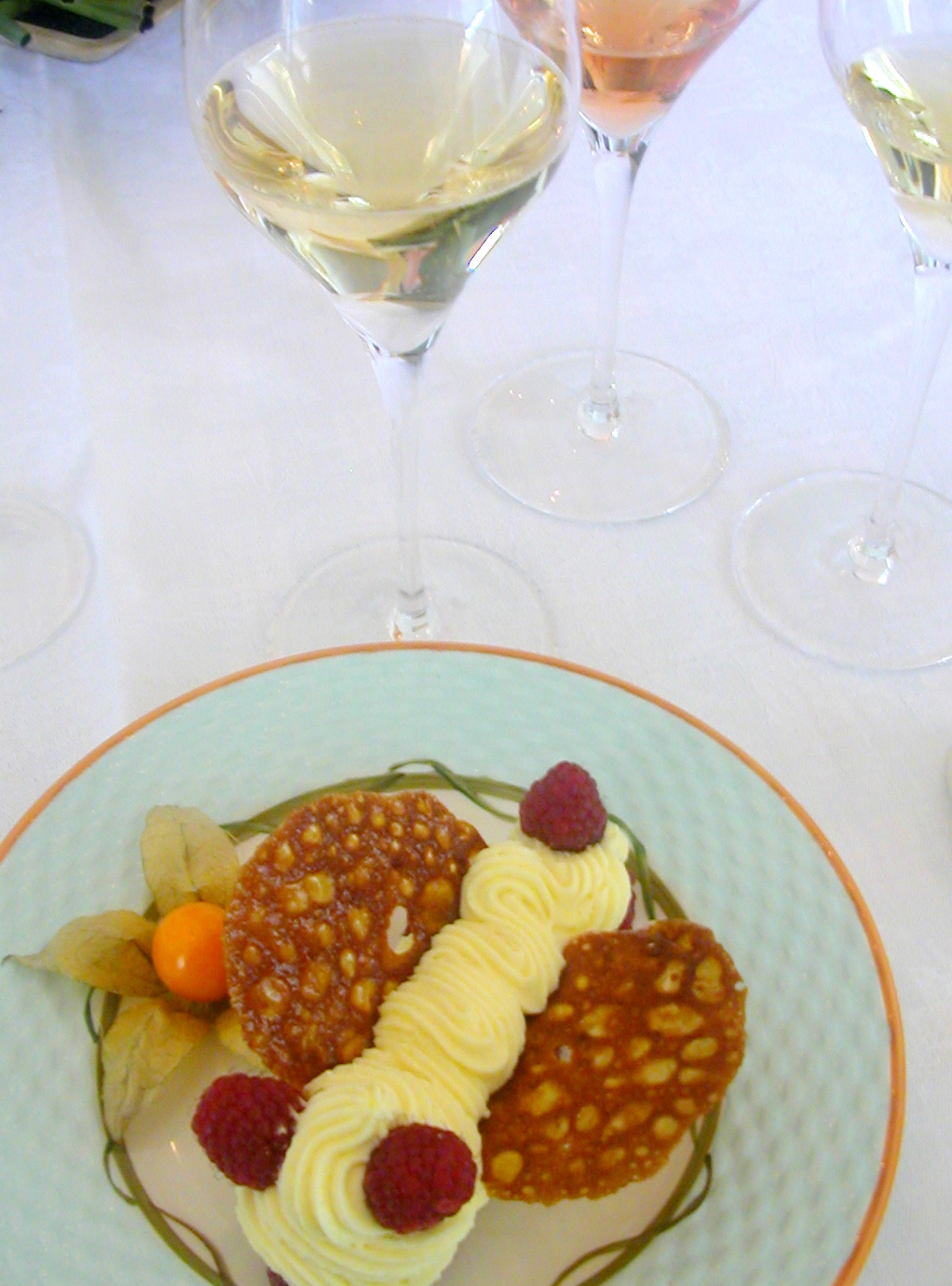
Dessert w Rich Reserve.JPG"The sommelier brought Champagne, a brut rosé from H. Billiot, which she then poured into a giant decanter and swirled theatrically, over and over again, to dissipate the bubbles. She said this would highlight the flavor of the pinot noir grapes in the wine, and make it a better pairing for the food.

"I called shenanigans then. I was laughing as I said it, but I used language inappropriate to any restaurant. My mother would have slapped me, no lie. .

"But the sommelier only laughed. It was as if she had heard a pigeon swear in the accent of a Bowery Bum. "We'll see," she said, and poured the wine. "I think you will like it."

"We swooned. Swirling brut rosé Champagne in a decanter to dissipate the carbonation before eating burrata is standard operating procedure for all of us now."

I first encountered the practice of decanting Champagne at Veuve Clicquot's private townhouse in Reims over a decade ago. You figure they ought to know what they're doing. And they decant the Rich Reserve, to reduce the distraction (and the acidity) of the bubbles and to highlight the wine's luscious flavors. With dessert, as shown.

By the way, if you're curious about Veuve Clicquot's practice about releasing its best Champagnes in vintage-dated bottles, read this.

Sunday, September 25, 2011

It's not about the bottle

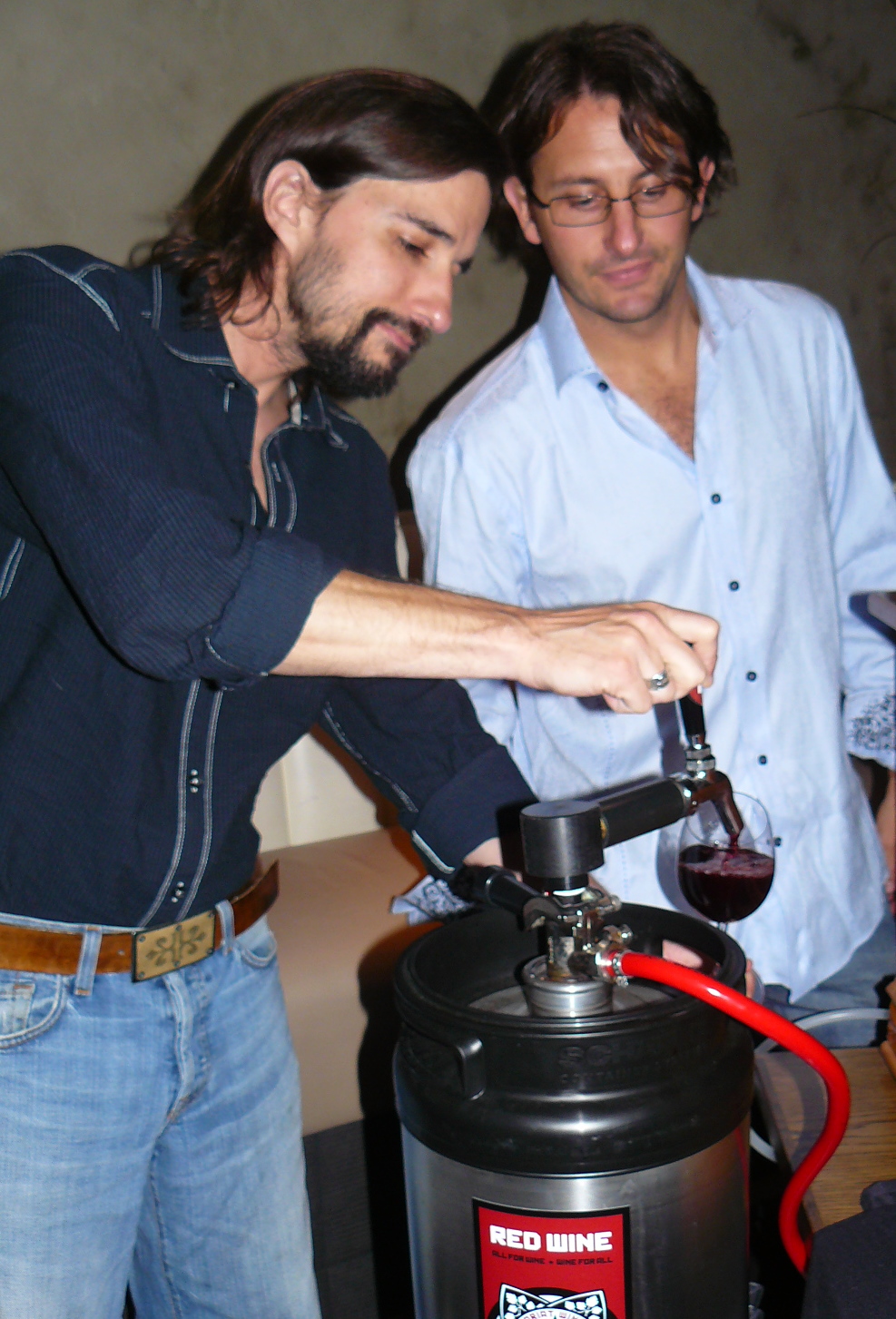
Proletariat wine.JPGHere's an idea you're going to enjoy. Premium wine by the glass, at your favorite restaurant, that costs a lot less because it comes from (wait for it) a keg.

Cheap wine's been sold like this for decades. Premium wine, a different story altogether. (Nor is this supermarket box wine, another category that's also trying to shed its image as bottom-of-the-barrel dregs). It's wine that would retail in the high $20s, but, says Darin Williams, you won't find it on the shelf in a wine store. "It's not about the bottle."

Williams is the founder of Small Lot Co-Op, a wine sales and marketing enterprise in Woodinville that gives his 20 or so clients, all smaller-scale wineries, access to the same services (financial, administrative, merchandising, client service) as bigger outfits when it comes to their prime target: Seattle-area restaurants. 

In January, Williams and Jordan Robinow (Small Lot's operations and account manager) hatched the business plan for Proletariat Wines (they'd already licensed and bonded the name). Then they called on Sean Boyd, the owner of the tiny (1,000-case) Rotie Cellars in Walla Walla, to come up with proprietary wines for their keg program. (It's not just surplus juice, like Trader Joe's Two Buck Chuck.) The result, Proletariat--a wine for the people, right?--aims for that sweet spot: a premium by-the-glass pour.

Proletariat logo.jpgAre you a traditionalist who Insists on seeing the bottle before you order a glass? No problem. Proletariat provides restaurants with etched carafes. But that almost misses the point. With the wine in a five-gallon keg (a standard 1/6th barrel size), there's no spoilage, no waste, no barrier between the wine and the cutsomer's glass.

Expect a generous, six-ounce pour of white to cost $10, a glass of red to run $14 or $15.

Proletariat has nine wines at this point, starting with a superb sauvignon blanc from the Wahluke Slope. There's also an excellent pinot noir from Oregon's Archery Summit Vineyard, and a Bordeaux blend from four vineyards in the Walla Walla region. Daniel's Broiler liked the cabernet sauvignon so much they bought the whole lot.