Monday, October 10, 2011

Clubby in Spain, Democratic in Seattle

Txoko dinner at Txori in Belltown, 2008
The Wall Street Journal's admirable online food & drink section had an interesting story this morning about txokos, which it described as all-male bastions of culinary invention and clubby dining.

In Spain's Basque Country, perhaps, but not in Seattle.

Carolin Messier and her ex-husband Joseba Jimenez di Jimenez used to run monthly txoko dinners at their Belltown pintxos bar Txori (pintxos being Basque tapas). Coed, lively, and open to all. Txoko, Messier points out, literally translates as "corner" in Basque and refers to places where men gathered to cook and enjoy their own food and drink, gastronomic societies, in other words.

"This spirit of preparing and enjoying good food can be appreciated at Txori," Messier wrote in an email newsletter three years ago, "but don't worry, women are very welcome!"

Alas, Txori is now closed, but Messier remains at the helm of Harvest Vine in Madison Park, where the Txoko tradition continues!

Harvest Vine, 2701 E. Madison, Seattle, 206-320-9771

And now a couple of boozy photos, since this is a blog about booze.

Negroni at Txori

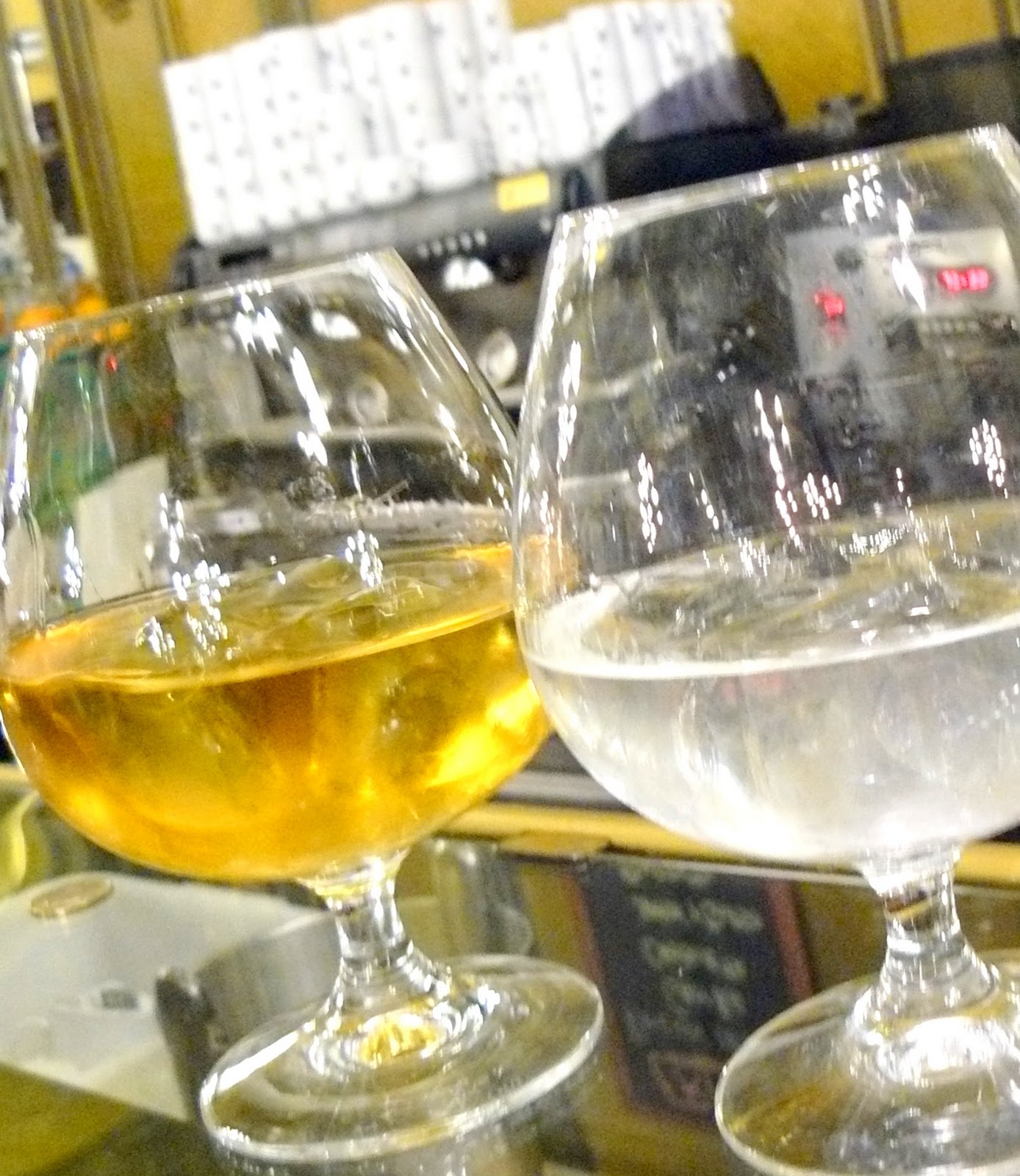
Digestivos at Cafe Iruna in Pamplona, 2008

Friday, October 7, 2011

Behind the Bar:

Dry Soda, Perlini, Scrappy

We Americans spend more money on soda than on real food. And it gets worse when you include flavored waters, energy drinks, and fruit juices, not to mention coffee and tea, and leaving aside beer, wine and spirits. We are a nation built on liquids enhanced with artificial flavors and sweeteners, and we're getting bulkier every day.

Sharelle Klaus
Into this fray, six years ago, stepped a local woman, Sharell Klaus. A foodie, yes, but primarily a high-tech consultant with four little kids. She set out, very deliberately, to create a new category of "natural" carbonated beverages (water, cane sugar, natural flavoring, and phosphoric acid) that would pair with food. She called it Dry Soda.

At the time, there were basically three flavors of canned soda: cola, lemon-lime, and root beer. So she thought about it for a while and came up with four candidates: Kumquat, Lavender, Rhubarb and Lemongrass. (She would soon add Vanilla and Juniper Berry, drop the Kumquat when it turned out that not many people knew what a kumquat was; she substituted Blood Orange.) Each flavor required a lot of experimental formulation in her Tacoma kitchen, a thousand batches each, Klaus says. 

Now 42, she's grateful for the guidance she received from a food scientist and a beverage industry consultant. Turnstyle Studio of Ballard, back then a startup as well, designed the appealing logo. Dry's flavors are developed in association with a company in California; the bottling is handled by an outfit in Portland. "Building a beverage brand is very expensive," Klaus acknowledges, so, in addition to its own sales team, Dry Soda has hired a savvy, $2 billion national food broker, Acosta, to make sure Dry gets onto the right grocery shelves and into the right restaurants (like the French Laundry).

There's an air of Energizer Bunny around Klaus. On the day she was named one of Seattle's 15 Women of Influence by Puget Sound Business Journal, she was launching a new flavor of soda, Wild Lime (think 7-Up on steroids) at Dry's headquarters in Pioneer Square, then hopped the red-eye to South Carolina to launch a new venture with Urban Outfitters. She'd been hoping to run in the New York Marathon next month, and hired her daughter's soccer instructor to be her running coach, but she concedes she's run out of time. "I'll have to put off the Marathon until 2012."

And then we have Evan Wallace, former physicist and ex-software engineer, who lives in a condo at the Market and spends a lot time in his "living room" downstairs, the Zig Zag Café.

Evan Wallace at Zig-Zag
Wallace is a tinker and inventor with a fondness for bubbles and abhorence of flat Champagne. How to keep the sparkle in a sparkling wine? Icy cold temperature helps; an airtight stopper helps, but really, once the bottle has been opened, the only way to keep the contents perfectly fresh is to exactly recreate the conditions in the bottle before the cork was popped. Wallace's solution, patented as the Perlage system, is to encase the entire bottle in a clear safety enclosure, and then repressurize the headspace of the bottle to its original state. At $200, it's an item for serious consumers of fine Champage.

But wait, there's another product from Wallace's company that will add sparkle to your bar: it's called Perlini, a kit (in a Mafia-style metal attaché case) that includes a shaker, a pressurizer, and a dozen CO2cartridges. (Also $200.)  Here's a video that shows how the system works; here's another one of Seattle bar guru Jamie Boudreau using Perlini to make a sparkling Negroni.
Miles Thomas makes Negroni at Branzino

Boudreau's new place on Capitol Hill, Cannon, is also at the forefront of another trend for craft-cocktail bars: homemade bitters, which he keeps in glass pitchers atop the bar.

Finally, for bars that don't have the time to brew their own, there's Scappy's Bitters, a local company founded by Miles Thomas, who went from tending bar at Branzino to the forefront of the bitters trend. (Technically, if it doesn't contain bitters, it's not a cocktail.) But bitters have gone way past the dark-and-dodgy days of Angostura's, first concocted two centuries ago in South America and still brewed in Trinidad. Scrappy's comes in a handful of flavors (orange, lime, grapefruit, lavender, celery--ideal for Bloody Mary--and chocolate). Demand has been intense; Thomas keeps moving to bigger quarters (he's currently in Fremont) but the product remains handmade.

The Perlini allows bartenders to produced a greater range of flavors without resorting to traditional mixers. Dry Soda allows non-drinkers to enjoy the flavors as well. And Scrappy makes it all (bitterly) worthwhile.

Wednesday, October 5, 2011

The Duke Picks His Bourbon

 Woodford Reserve certainly seems to be doing alright for itself, with a few dozen high-profile "preferred partner" relationships around the country, including two in Seattle. The brand didn't even exist 15 years ago; now it has sales of 200,000 cases. It's not your grandfather's bourbon (that might be Early Times, or Jim Beam--six milliion cases a year!) or your rich uncle's, either (Jack Daniel's, perhaps, though that's Tennessee, not Kentucky, but ten million cases nonetheless). These days, it's all about small batch bourbon, and Woodford's, along with brands like Knob Creek and Bulliet, are reviving the sagging fortunes of the spirits industry. Woodford's parent, Brown Forman, is the nation's oldest wine and spirits distributor, and their marketing plan for Woodford involves creating "personal" barrels of bourbon for this elite group of buyers.

Chris Morris, Master Distiller
Usually, the top brass at the participating restaurants or hotels travel to the picturesque town of Versailles, as The Metropolitan Grill's staff has done the past couple of years. That's Ver-SAILS, not Ver-SIGH, by the way. (We wrote about Met Grill's Manhattan contest last month.) But Duke's Chowderhouse, a chain of six local restaurants, has been a preferred partner even longer, so this week Woodford's master distiller, Chuck Morris, left Kentucky's bucolic bluegrass country and brought his barrel samples to the Duke's at Southcenter. A Seattle institution, Duke's is just shy of 40 years old, and still run by its founder, Duke Moscrip.


Duke Moscrip
"Bourbon, by law, is 51 percent corn," the genial yet professorial Morris reminded the tasting panel, whom he called "steely-eyed veterans." Woodford also includes 18 percent rye and 10 percent malted barley in its recipe, and uses old-fashioned, copper pot stills to create its bourbons, which are aged for at least four years in white oak barrels. By the time the tasters arrive, there are some surprising variations between barrels. The afternoon's assignment: taste eight samples at full strength, drop four, then taste all six combinations of two-barrel blends, pick a favorite.

It's an exercise that would be familiar to blenders of wine and concocters of Champagne. The final choice will combine two specific barrels of Woodford Reserve to be labeled as Duke's personal selection, 360 bottles altogether. Barely enough to last a year. Duke's isn't known as a bourbon bar, though; it's where you go for chowder, fish and chips, or planked Copper River salmon, sitting on the deck in good weather. (It can get crazy; the relatively small Alki store takes in $20,000 on a nice day.)

As for the boyish-looking Morris, who is 54, he'll return to bluegrass country, where Woodford Reserve is the official bourbon of the Kentucky Derby. Does he own horses himself? "No, thank goodness."

Sunday, September 25, 2011

It's not about the bottle

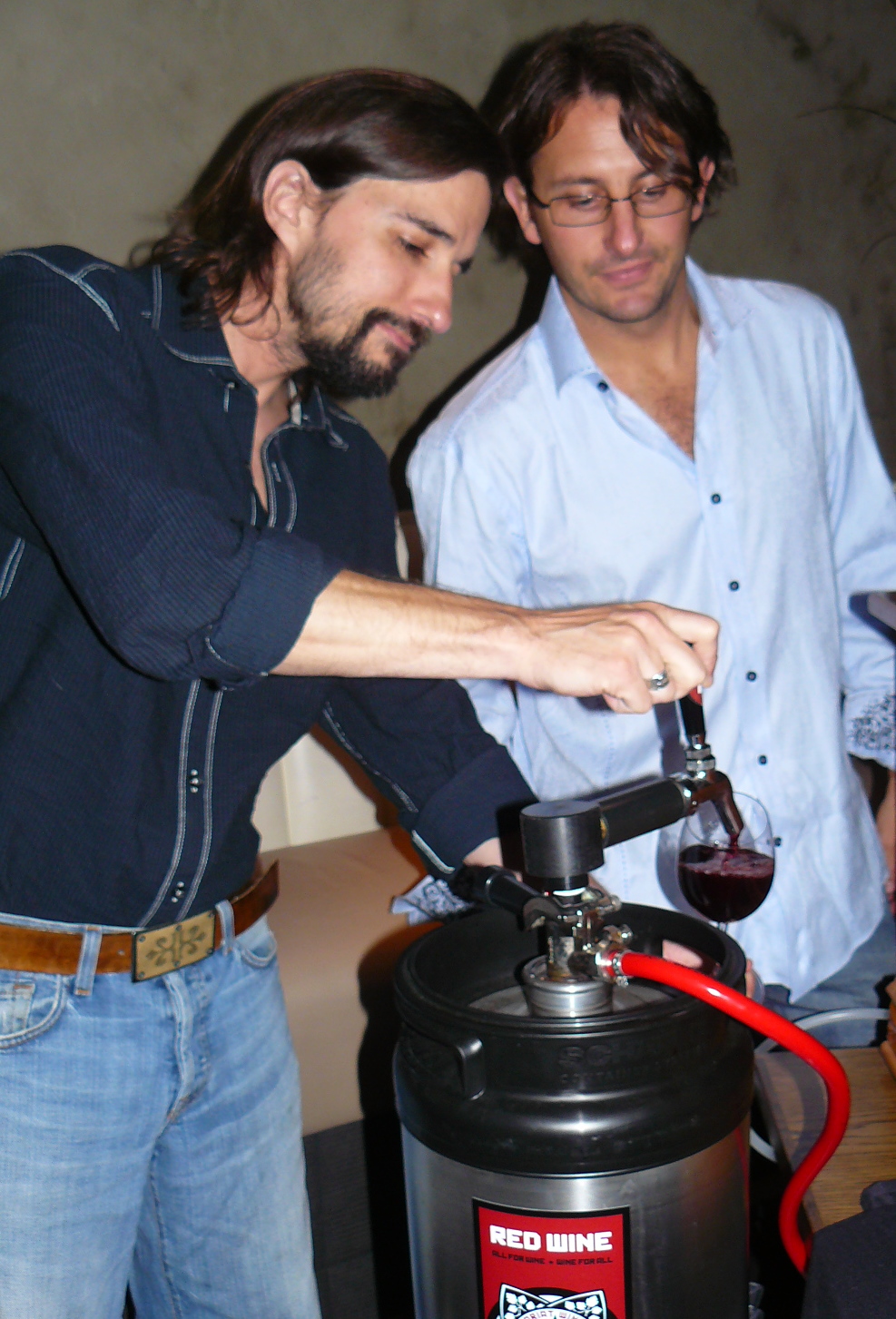
Proletariat wine.JPGHere's an idea you're going to enjoy. Premium wine by the glass, at your favorite restaurant, that costs a lot less because it comes from (wait for it) a keg.

Cheap wine's been sold like this for decades. Premium wine, a different story altogether. (Nor is this supermarket box wine, another category that's also trying to shed its image as bottom-of-the-barrel dregs). It's wine that would retail in the high $20s, but, says Darin Williams, you won't find it on the shelf in a wine store. "It's not about the bottle."

Williams is the founder of Small Lot Co-Op, a wine sales and marketing enterprise in Woodinville that gives his 20 or so clients, all smaller-scale wineries, access to the same services (financial, administrative, merchandising, client service) as bigger outfits when it comes to their prime target: Seattle-area restaurants. 

In January, Williams and Jordan Robinow (Small Lot's operations and account manager) hatched the business plan for Proletariat Wines (they'd already licensed and bonded the name). Then they called on Sean Boyd, the owner of the tiny (1,000-case) Rotie Cellars in Walla Walla, to come up with proprietary wines for their keg program. (It's not just surplus juice, like Trader Joe's Two Buck Chuck.) The result, Proletariat--a wine for the people, right?--aims for that sweet spot: a premium by-the-glass pour.

Proletariat logo.jpgAre you a traditionalist who Insists on seeing the bottle before you order a glass? No problem. Proletariat provides restaurants with etched carafes. But that almost misses the point. With the wine in a five-gallon keg (a standard 1/6th barrel size), there's no spoilage, no waste, no barrier between the wine and the cutsomer's glass.

Expect a generous, six-ounce pour of white to cost $10, a glass of red to run $14 or $15.

Proletariat has nine wines at this point, starting with a superb sauvignon blanc from the Wahluke Slope. There's also an excellent pinot noir from Oregon's Archery Summit Vineyard, and a Bordeaux blend from four vineyards in the Walla Walla region. Daniel's Broiler liked the cabernet sauvignon so much they bought the whole lot.

Saturday, September 24, 2011

A Cocktail Contest, You Say? That's the Spirit!

Lots of new cocktails out there, lots of new cocktail-related concoctions. It's a huge new business, catering to fussy drinkers, bored drinkers, adventurous drinkers. We've got a series of posts about this in the pipeline (as it were). Here's the first, about the most traditional American spirit of all, bourbon.
Metropolitan Grill's head bartender Rob Nokes


Didn't we just do this? (Memory plays tricks on us professional drinkers, ya know.) But yes, we did, last July.

And now a new crop of entrants, and a new, custom-blended bourbon from Woodford Reserve. This year's version is a little less spicy, a bit lighter-bodied, yet still oaky in the nose. The GM of downtown Seattle's prime steakhouse, Josh Anderson, exec chef Eric Hellner, and the Met's sommelier, Thomas Price, headed to Versailles, Kentucky, earlier this season and made the pick at the Woodford distillery.

"Running out of glassware!" calls the creator of Manhattan #1, a 13-year veteran behind the bar named Steve Alexander. His concoction includes Fernet Branca, Peychaud bitters, a splash of Maraschino and an orange zert, kinda like a Negroni with bourbon instead of gin. "The most Manhattan-y," says a nearby discerning journalist. "The least bourbon-y," thinks another blogger.

There's another contender among the traditionalists: head barman Rob Nokes, using the robust Woodford Reserve, Lucid absinthe, Italian vermouth and Fee Brothers Cranberry Bitters. "It's a Sazerac-style drink," says Nokes, who's been taking care of bourbon connoisseurs at The Met for two decades.

And in the end, wouldn't you know it was the most traditional concoction that won. Bravo, Mr. Nokes! Thanks, Met Grill! The Met Manhattan No. 5 will be available for $14 starting this weekend; it's a steal, considering that last year's winner cost $15. ("It's the economy," says GM Anderson.)


Steve Alexander at work

Two final observations before we stumble off into the night. First, three of the five contestants were professional bartenders, and their entries were along classic lines. Two were by Met Grill servers, and they veered severely toward the sweet side. Does this mean that servers think customers want sugary drinks? To be followed up.

Second, there are now 4.7 million bourbon barrels in the state of Kentucky, several hundred thousand more than there are actual residents in the state. The president of the Kentucky Distillers Association says there's "an explosion" of small-batch and single-barrel products. Good to know.

"Bourbon is a great value," says Met Grill GM Anderson. A premium bourbon costs less than half as much as a single-malt Scotch. The winning Manhattan No. 5 goes on sale this weekend for $14, down a buck from last year.

Metropolitan Grill, 820 2nd Ave. Seattle 206 624 3287


- Posted using BlogPress from my iPad


Tuesday, September 13, 2011

Allegrini's Single-Vineyard Valpollicella

Allegrini's Palazzo della Torre outside Verona

The Allegrini family owns a splendid hilltop property outside of Vernoa, in the Valpolicella region of northern Italy, whose pergola-trained vineyards are planted mostly to Corvina grapes. On the flatlands, Valpolicella wines are light and acceptable for everyday drinking; it's on the hills that they have the potential for more character. Allegrini produces its best wines here: Amarone, using the traditional ripasso method, and a 65-acre, single-vineyard Valpolicella named for the estate's Renaissance villa, Palazzo Della Torre. About a third of the harvest isn't fermented right away but is kept aside until January, when the dried and highly concentrated grapes are added to the new wine and fermented again. The resulting wine is aged for 15 months in small casks.

As it happens, we saw this "passito" technique used in Emilia Romagna  when we visited Italy in the fall of 2008. Here's what the grapes  looked like, on the right.

You could think of the Allegrini wine, which retails for about $20 in Washington, as a "Baby Amarone." But it's a serious bottle on its own, as the winery's Marilisa Allegrini demonstrated at a culinary event this week. It was called "Cookoff for a Cause," and featured three chefs competing for their favorite charity.
  • Sabrina Tinsley of La Spiga (where the event was held) prepared a duck breast stuffed with prosciutto and Parmigianno-Reggiano.
  • Emran Chowdhury of Cantinetta wowed the guests (well, me, especially) with his braised oxtail and ethereal ricotta gnudi (dumplings).
  • Mauirizio Milazzo of Barolo won the top prize ($5,000, for the Juvenile Diabetes Research Foundation) with a rabbit meatball braised in red wine.


Chowdhury, Allegrini, Milaszzo, Tinsley


More pictures, including the dishes, in the album. Thanks to Joe Kennedy for the camera!

Sunday, September 11, 2011

Croft Pink

Hey, I'm trying to say nice things here. Croft Pink, basically a rosé from the Douro Valley, released by the venerable Port house of Croft and retailing in the mid-teens. I'm drinking it right now, chilled, on a warm afternoon, (yes, with ice cubes).

But tell me, am I the only one who finds these flash sites so annoying? Bad enough they make you fake your birthday, but who's the marketing genius that sells the liquor companies on fancy-dancy screens with techno music?

I like this wine. It's perfect for this moment, with a handful of cashews while my steak and baked potato are making themselves ready. What bothers me is the notion that no one will drink it unless they are pre-seduced by Adobe.

And don't get me started on the music.