Showing posts with label politics. Show all posts

Wednesday, December 7, 2011

The Populist Baron of Booze

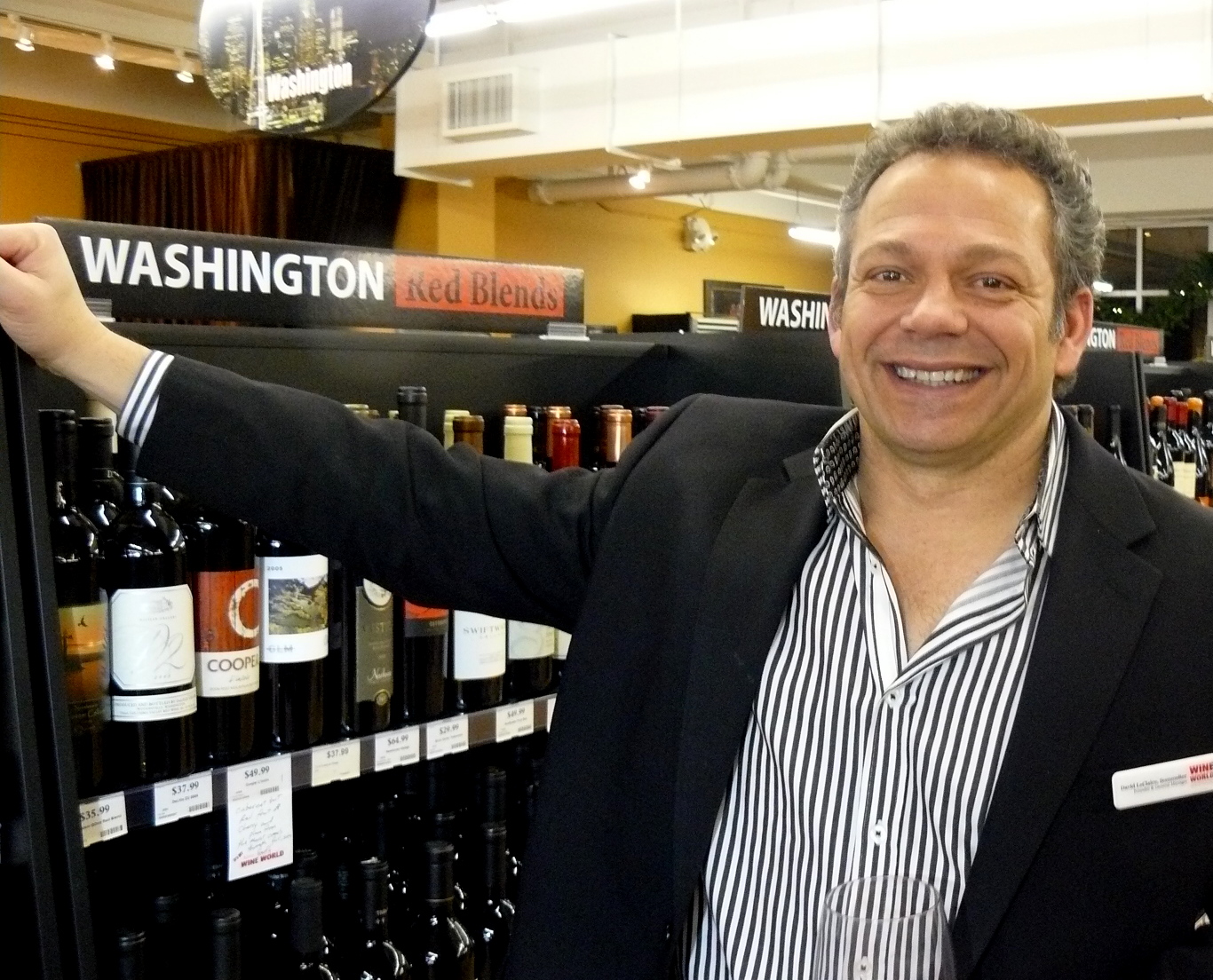
David LeClaire w Wash wines.JPG

Wine World Warehouse, a 23,000-square foot facility just off I-5 on NE 45th, is the largest wine store in the Northwest. Six months from now, when the Washington Liquor Control Board is supposed to close its 700 or so retail outlets, Wine World will also become Washington's largest independent liquor store. Yet its owner, Seattle sommelier David LeClaire, is not thrilled.

LeClaire launched his superstore a year ago, taking over an expansive space that once been the University Plaza Hotel, and, briefly, an OfficeMax outlet. He had spent the previous decade as a savvy producer of Seattle wine events, with a politician's touch and a marketer's dream list of writers and tastemakers; before that, he'd spent a decade as the wine steward at the Painted Table in the Alexis Hotel.  With backing from a group of private investors and the energetic support of a get-it-done chef named Lenny Rede, LeClaire assembled shelves that display 8,000 bottles, including wines from 500 Washington wineries. He's a hero to wine producers who leveraged his hard work as a consultant into a position of retail prominence.

Wine World interior
Let's flash forward for a moment, to June 1st, 2012, the day after the state goes out of the retail spirits business. Two out-of-state liquor giants, Bevmo (from California) and Total Beverage (Maryland), will have their grand openings. No one knows yet just where they'll be located, but they've already sent scouting parties. "They even came to see me," LeClaire admits. "How could I say no?" Bevmo has 77 stores in the western US, Total has over 100.

LeClaire, now 50, grew up in Escanaba, on Michigan's Upper Peninsula, a town of some 13,000 souls. When Wal-Mart opened a 24-hour superstore on the west side of Lincoln Road, he recalls, the townspeople responded with unusual solidarity to support their local merchants, among them Elmer's County Market, on the other side of the highway. Elmer Dagenais, who died last year at the age of 94, was the sort of old-fashioned shopkeeper who doesn't exist anymore. He'd trust his customers to settle their bills when they'd get a paycheck. Even more importantly, Elmer would hire local teenagers, give them their first jobs and teach them the value of community. And plenty of times, he'd be standing right beside his kids, LeClaire among them, helping bag groceries.

"Treat your customers with respect, appreciate their business and thank them for shopping at your store." Those were Elmer Dagenais' words, but they're also David LeClaire's.

LeClaire voted "no" on Initiative 1183 to privatize Washington's liquor business, not because he wanted to keep the state stores open or because he sympathized with the union workers who'll be laid off, but because he didn't like Costco's "clear the deck" approach, which he fears will "decimate the little guys." 

As owner of the only freestanding wine shop in Washington to meet I=1183's minimum size of 10,000-square ft for liquor sales, LeClaire certainly isn't going to turn away from the opportunity to sell spirits. He intends to sell far more than the "Top 100" brands, especially in categories like Scotch, Tequila and Sherry. He'll showcase the Northwest's increasingly ambitious micro-distilleries. He'll continue to have partnerships with outside event planners, and hold tastings and host private events at Wine World. But he's deeply worried about the effects of privatization on smaller wine shops in small towns around the state. "What's going to happen to the independent wine shops in Hoquiam or Montesano once the Wal-Mart in Aberdeen starts selling liquor?" he asks. It's an ethic you don't see very often.

Before the November election, LeClaire was warning of "changes buried in this initiative [that] will crush or at the very least severely impact small wine wineries, small wine stores, and small grocery stores." The voters, though, were so anxious to get government out of the liquor business that they approved I-1183. "We are going to benefit handsomely," LeClaire admits, "but a no vote would have been in the long-term best interest of the entire community."

Thursday, August 18, 2011

Washignton to get a new wine research center

The Washington Wine Commission today pledged $7.4 million over the next decade toward the construction of a wine science center on the Richland campus of Washington State University.

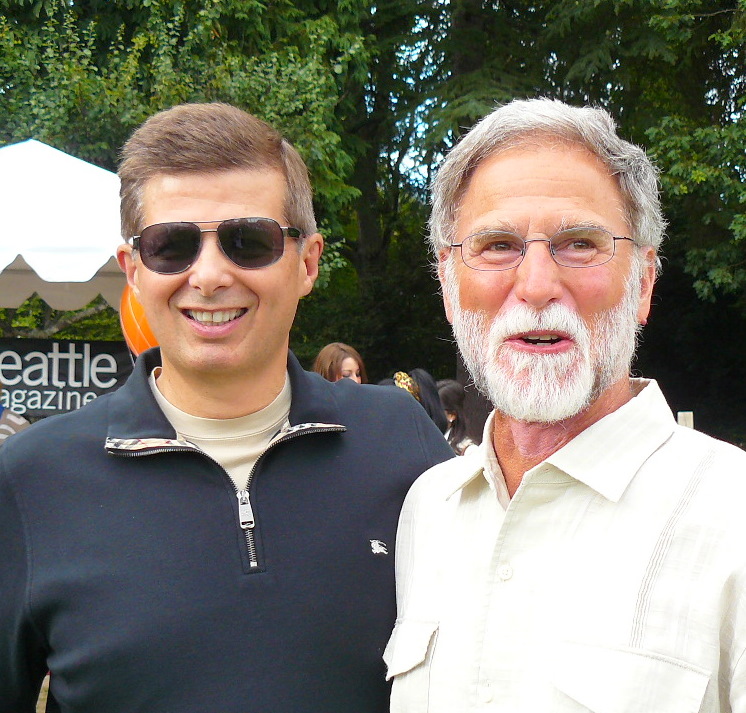
Baseler & Betz.JPG
It doesn't hurt that Ted Baseler, ceo of the state's largest wine company, Ste. Michelle Wine Estates, is also chairman of WSU's board of regents. "All of the world's great wine regions have a benchmark institution to conduct research into grape growing and wine making, Baseler said. "The Wine Science Center will enable us to properly educate our industry's future leaders."

The center is expected to be a gathering place that will spark innovation, fuel economic development, support local, regional, national and international collaboration, and provide a catalyst for research breakthroughs, according to the Campaign for Wine website. (That's Baseler on the left in the photo, standing with Bob Betz, founder of Betz Family Winery, at the annual picnic for the Auction of Washington Wines.)

The industry's contribution will be raised through assessments on grape and wine production, beginning with the 2011 harvest. Says Kent Waliser, general manager of Sagemoor Vineyards and chairman of the commission, "This critically important project....will be seen as a significant milestone in the evolution of our industry."

The research and teaching facility will house the WSU's rapidly expanding viticulture & enology program led by Dr. Thomas Henick-Kling. The new building will be situated on land donated by the Port of Benton, developed by a new public development authority to be created by the City of Richland), and will be turned over to Washington State University.
Marty Clubb, president of the Washington Wine Institute and owner of L'Ecole Nº 41 Winery, says that the research expected to take place at the Wine Science Center will help ensure the continued growth of the state's wine industry in an increasingly competitive global marketplace.

With over 700 wineries and more than 40,000 acres planted statewide, the Washington State wine industry contributes more than $3 billion annually to the state economy and $4.7 billion annually to the national economy. Additional information from the Wine Commission in the PDF linked to this page.

Thursday, June 16, 2011

Privatizing the Wrong Half of the State's Liquor System


So set 'em up, Joe. I've got a little story you ought to know.

There are two challenges to the state liquor monopoly this summer, one from an unproven private proposal, the other facing huge odds to demonstrate public support. Let's start with the one that the legislature passed, SB 5942, and which Governor Gregoire signed on Wednesday.

Down in Olympia, late one night during the special session, a couple of legislators snuck a bill into the hopper to privatize the supply side of the state's liquor business. That's right, to lease the big distribution center in SODO to a Tacoma consultant financed by a New York private equity firm.

Why'd they do that? After all, the centralized warehouse is the crown jewel in the state's antiquated liquor distribution system, the only part that's properly computerized and automated. Ah, follow the money. The consultant says he'd pay the state $300 million. That's a big piece of the amount the state needs to balance its budget.

It's not a done deal by any means. The bill, SB 5942, names no names, but it does direct the Liquor Board and the State Treasurer to investigate the possibilities of a long-term lease. But it's got an emergency clause, making it take effect immediately, with a fast track for bids and contracts, assuming the governor signs it. (The names, in case you're interested, are 33-year-old Tom Luce, a former district director for Rep. Norm Dicks, and Sandeep Kaushik, a political consultant who formerly wrote for the Stranger; the financing would come from Lindsay Goldberg, the firm that bankrolled a similar deal in Maine in 2004.)

The bill carries a clause declaring what the Seattle Times calls a "liquor emergency," though the Liquor Board takes no official position on the matter since it hasn't been signed yet. Officially, the Board's only input was to insist that the jobs of state employees be protected.

As it happens, it costs the state about $3.25 to receive, inventory, warehouse and deliver a case of booze to a state-owned or state-franchised liquor store, and it's hard to see how any private party could perform the same service for less, especially if the new operators have to protect the existing workers' jobs. A second warehouse east of the mountains would be helpful, but no outfit that provides logistics services exclusively can do much to increase its customer's business.

One is left with the feeling that there's got to be a catch somewhere.