Showing posts with label Spirits. Show all posts
Sunday, September 16, 2012
Drinking Lesson: Absinthe can get you hammered
Marteau is French for "hammer." It's also Gwydion Stone's brand of Absinthe, Stone being the founding member of an association called the Wormwood Society whose purpose is to educate bartenders and drinkers about the magic green distillate. Not an easy task, since competitors (virtually the entire alcoholic beverage industry, not to mention zealous government bureaucrats) are more than eager to demonize absinthe, ascribing to it every evil and unfortunate medical condition known to the planet.
Never mind that real absinthe, properly made, is a thing of beauty, "like drinking an Alpine meadow," as Stone put it last week to a dozen curious imbibers on the penthouse terrace of the Sorrento Hotel. It was the final session of 2012 for the hotel's popular series of monthly "Drinking Lessons," which resume next year on the second Wednesday of every month with two sessions a night in the hotel's elegant Hunt Club bar. Champagne, rare wines, tequila, rye, gin...an even dozen classes for $35 each, which includes an opening lecture, drinks, and Hunt Club bites.
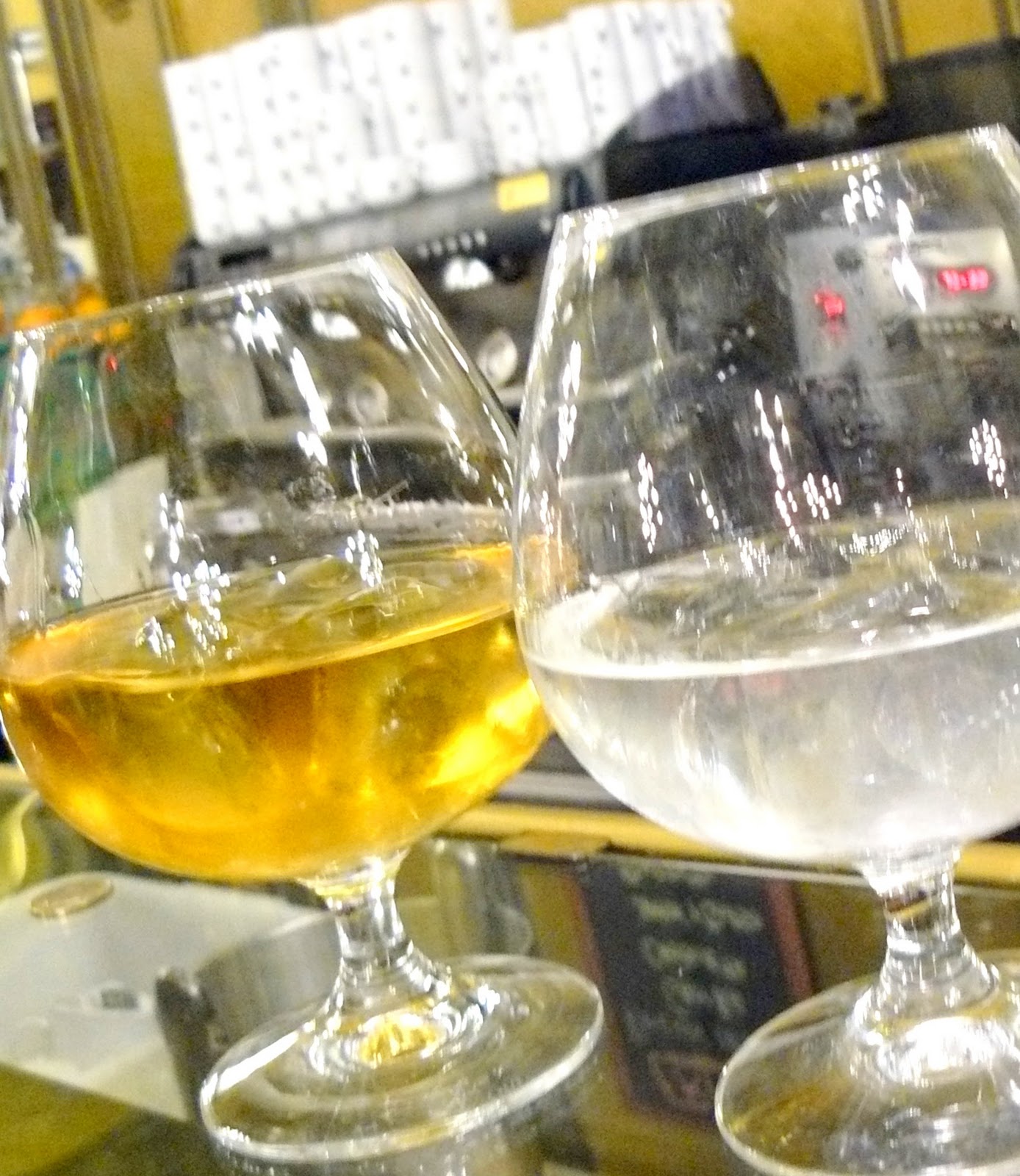
Back to the drinking lesson for a sec. To sweeten the absinthe, drip some icewater through a sugar cube suspended on a slotted spoon above the glass. Don't set fire to the sugar! That's a bar trick from eastern Europe designed to camouflage counterfeit absinthe; the real stuff turns milky when water is added. Absinthe used to be cheaper than wine; that's why it was so popular during the Belle Époque, at the end of the 19th century. In its early years, until craft distilleries were legalized in Washington, Stone's Marteau was distilled under contract in Switzerland. Remember, it's a distillate, not an infusion. Now close your eyes and taste the meadow.
Program details and reservations for 2013 are here.
Sorrento Hotel, 900 Madison St., Seattle, 206-622-6400
Labels:
absinthe,
sorrento hotel,
Spirits
Location:
Seattle, WA, USA
Wednesday, December 7, 2011
The Populist Baron of Booze
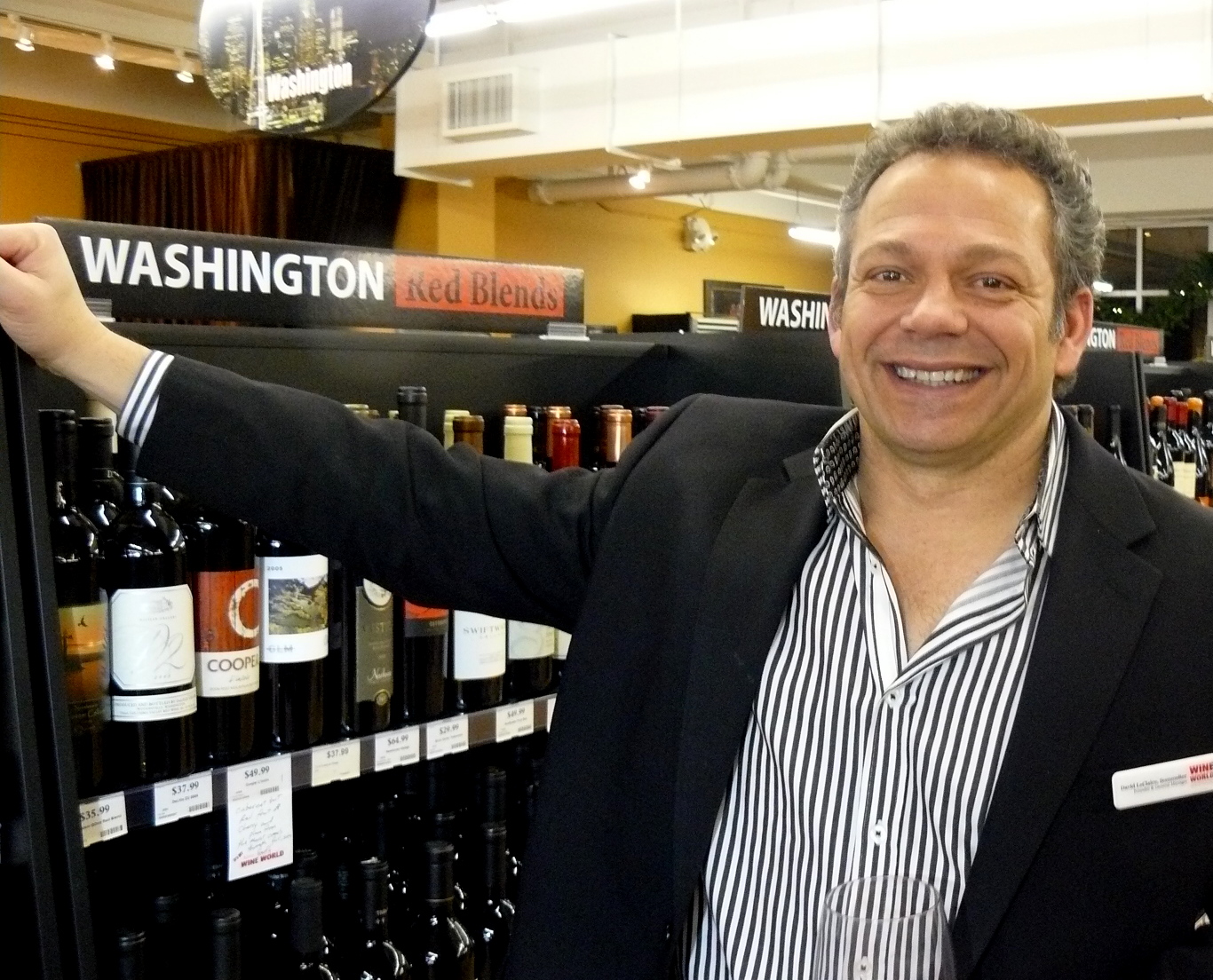
Wine World Warehouse, a 23,000-square foot facility just off I-5 on NE 45th, is the largest wine store in the Northwest. Six months from now, when the Washington Liquor Control Board is supposed to close its 700 or so retail outlets, Wine World will also become Washington's largest independent liquor store. Yet its owner, Seattle sommelier David LeClaire, is not thrilled.
LeClaire launched his superstore a year ago, taking over an expansive space that once been the University Plaza Hotel, and, briefly, an OfficeMax outlet. He had spent the previous decade as a savvy producer of Seattle wine events, with a politician's touch and a marketer's dream list of writers and tastemakers; before that, he'd spent a decade as the wine steward at the Painted Table in the Alexis Hotel. With backing from a group of private investors and the energetic support of a get-it-done chef named Lenny Rede, LeClaire assembled shelves that display 8,000 bottles, including wines from 500 Washington wineries. He's a hero to wine producers who leveraged his hard work as a consultant into a position of retail prominence.
| Wine World interior |
LeClaire, now 50, grew up in Escanaba, on Michigan's Upper Peninsula, a town of some 13,000 souls. When Wal-Mart opened a 24-hour superstore on the west side of Lincoln Road, he recalls, the townspeople responded with unusual solidarity to support their local merchants, among them Elmer's County Market, on the other side of the highway. Elmer Dagenais, who died last year at the age of 94, was the sort of old-fashioned shopkeeper who doesn't exist anymore. He'd trust his customers to settle their bills when they'd get a paycheck. Even more importantly, Elmer would hire local teenagers, give them their first jobs and teach them the value of community. And plenty of times, he'd be standing right beside his kids, LeClaire among them, helping bag groceries.
"Treat your customers with respect, appreciate their business and thank them for shopping at your store." Those were Elmer Dagenais' words, but they're also David LeClaire's.
LeClaire voted "no" on Initiative 1183 to privatize Washington's liquor business, not because he wanted to keep the state stores open or because he sympathized with the union workers who'll be laid off, but because he didn't like Costco's "clear the deck" approach, which he fears will "decimate the little guys."
As owner of the only freestanding wine shop in Washington to meet I=1183's minimum size of 10,000-square ft for liquor sales, LeClaire certainly isn't going to turn away from the opportunity to sell spirits. He intends to sell far more than the "Top 100" brands, especially in categories like Scotch, Tequila and Sherry. He'll showcase the Northwest's increasingly ambitious micro-distilleries. He'll continue to have partnerships with outside event planners, and hold tastings and host private events at Wine World. But he's deeply worried about the effects of privatization on smaller wine shops in small towns around the state. "What's going to happen to the independent wine shops in Hoquiam or Montesano once the Wal-Mart in Aberdeen starts selling liquor?" he asks. It's an ethic you don't see very often.
Before the November election, LeClaire was warning of "changes buried in this initiative [that] will crush or at the very least severely impact small wine wineries, small wine stores, and small grocery stores." The voters, though, were so anxious to get government out of the liquor business that they approved I-1183. "We are going to benefit handsomely," LeClaire admits, "but a no vote would have been in the long-term best interest of the entire community."
Location:
400 NE 45th St, Seattle, WA 98105, USA
Monday, October 10, 2011
Clubby in Spain, Democratic in Seattle
| Txoko dinner at Txori in Belltown, 2008 |
In Spain's Basque Country, perhaps, but not in Seattle.
Carolin Messier and her ex-husband Joseba Jimenez di Jimenez used to run monthly txoko dinners at their Belltown pintxos bar Txori (pintxos being Basque tapas). Coed, lively, and open to all. Txoko, Messier points out, literally translates as "corner" in Basque and refers to places where men gathered to cook and enjoy their own food and drink, gastronomic societies, in other words.
"This spirit of preparing and enjoying good food can be appreciated at Txori," Messier wrote in an email newsletter three years ago, "but don't worry, women are very welcome!"
Alas, Txori is now closed, but Messier remains at the helm of Harvest Vine in Madison Park, where the Txoko tradition continues!
Harvest Vine, 2701 E. Madison, Seattle, 206-320-9771
And now a couple of boozy photos, since this is a blog about booze.
| Negroni at Txori |
| Digestivos at Cafe Iruna in Pamplona, 2008 |
Friday, October 7, 2011
Behind the Bar: Dry Soda, Perlini, Scrappy
We Americans spend more money on soda than on real food. And it gets worse when you include flavored waters, energy drinks, and fruit juices, not to mention coffee and tea, and leaving aside beer, wine and spirits. We are a nation built on liquids enhanced with artificial flavors and sweeteners, and we're getting bulkier every day.
Into this fray, six years ago, stepped a local woman, Sharell Klaus. A foodie, yes, but primarily a high-tech consultant with four little kids. She set out, very deliberately, to create a new category of "natural" carbonated beverages (water, cane sugar, natural flavoring, and phosphoric acid) that would pair with food. She called it Dry Soda.
At the time, there were basically three flavors of canned soda: cola, lemon-lime, and root beer. So she thought about it for a while and came up with four candidates: Kumquat, Lavender, Rhubarb and Lemongrass. (She would soon add Vanilla and Juniper Berry, drop the Kumquat when it turned out that not many people knew what a kumquat was; she substituted Blood Orange.) Each flavor required a lot of experimental formulation in her Tacoma kitchen, a thousand batches each, Klaus says.
Now 42, she's grateful for the guidance she received from a food scientist and a beverage industry consultant. Turnstyle Studio of Ballard, back then a startup as well, designed the appealing logo. Dry's flavors are developed in association with a company in California; the bottling is handled by an outfit in Portland. "Building a beverage brand is very expensive," Klaus acknowledges, so, in addition to its own sales team, Dry Soda has hired a savvy, $2 billion national food broker, Acosta, to make sure Dry gets onto the right grocery shelves and into the right restaurants (like the French Laundry).
There's an air of Energizer Bunny around Klaus. On the day she was named one of Seattle's 15 Women of Influence by Puget Sound Business Journal, she was launching a new flavor of soda, Wild Lime (think 7-Up on steroids) at Dry's headquarters in Pioneer Square, then hopped the red-eye to South Carolina to launch a new venture with Urban Outfitters. She'd been hoping to run in the New York Marathon next month, and hired her daughter's soccer instructor to be her running coach, but she concedes she's run out of time. "I'll have to put off the Marathon until 2012."
And then we have Evan Wallace, former physicist and ex-software engineer, who lives in a condo at the Market and spends a lot time in his "living room" downstairs, the Zig Zag Café.
Wallace is a tinker and inventor with a fondness for bubbles and abhorence of flat Champagne. How to keep the sparkle in a sparkling wine? Icy cold temperature helps; an airtight stopper helps, but really, once the bottle has been opened, the only way to keep the contents perfectly fresh is to exactly recreate the conditions in the bottle before the cork was popped. Wallace's solution, patented as the Perlage system, is to encase the entire bottle in a clear safety enclosure, and then repressurize the headspace of the bottle to its original state. At $200, it's an item for serious consumers of fine Champage.
But wait, there's another product from Wallace's company that will add sparkle to your bar: it's called Perlini, a kit (in a Mafia-style metal attaché case) that includes a shaker, a pressurizer, and a dozen CO2cartridges. (Also $200.) Here's a video that shows how the system works; here's another one of Seattle bar guru Jamie Boudreau using Perlini to make a sparkling Negroni.
Boudreau's new place on Capitol Hill, Cannon, is also at the forefront of another trend for craft-cocktail bars: homemade bitters, which he keeps in glass pitchers atop the bar.
Finally, for bars that don't have the time to brew their own, there's Scappy's Bitters, a local company founded by Miles Thomas, who went from tending bar at Branzino to the forefront of the bitters trend. (Technically, if it doesn't contain bitters, it's not a cocktail.) But bitters have gone way past the dark-and-dodgy days of Angostura's, first concocted two centuries ago in South America and still brewed in Trinidad. Scrappy's comes in a handful of flavors (orange, lime, grapefruit, lavender, celery--ideal for Bloody Mary--and chocolate). Demand has been intense; Thomas keeps moving to bigger quarters (he's currently in Fremont) but the product remains handmade.
The Perlini allows bartenders to produced a greater range of flavors without resorting to traditional mixers. Dry Soda allows non-drinkers to enjoy the flavors as well. And Scrappy makes it all (bitterly) worthwhile.
| Sharelle Klaus |
At the time, there were basically three flavors of canned soda: cola, lemon-lime, and root beer. So she thought about it for a while and came up with four candidates: Kumquat, Lavender, Rhubarb and Lemongrass. (She would soon add Vanilla and Juniper Berry, drop the Kumquat when it turned out that not many people knew what a kumquat was; she substituted Blood Orange.) Each flavor required a lot of experimental formulation in her Tacoma kitchen, a thousand batches each, Klaus says.
Now 42, she's grateful for the guidance she received from a food scientist and a beverage industry consultant. Turnstyle Studio of Ballard, back then a startup as well, designed the appealing logo. Dry's flavors are developed in association with a company in California; the bottling is handled by an outfit in Portland. "Building a beverage brand is very expensive," Klaus acknowledges, so, in addition to its own sales team, Dry Soda has hired a savvy, $2 billion national food broker, Acosta, to make sure Dry gets onto the right grocery shelves and into the right restaurants (like the French Laundry).
There's an air of Energizer Bunny around Klaus. On the day she was named one of Seattle's 15 Women of Influence by Puget Sound Business Journal, she was launching a new flavor of soda, Wild Lime (think 7-Up on steroids) at Dry's headquarters in Pioneer Square, then hopped the red-eye to South Carolina to launch a new venture with Urban Outfitters. She'd been hoping to run in the New York Marathon next month, and hired her daughter's soccer instructor to be her running coach, but she concedes she's run out of time. "I'll have to put off the Marathon until 2012."
And then we have Evan Wallace, former physicist and ex-software engineer, who lives in a condo at the Market and spends a lot time in his "living room" downstairs, the Zig Zag Café.
| Evan Wallace at Zig-Zag |
But wait, there's another product from Wallace's company that will add sparkle to your bar: it's called Perlini, a kit (in a Mafia-style metal attaché case) that includes a shaker, a pressurizer, and a dozen CO2cartridges. (Also $200.) Here's a video that shows how the system works; here's another one of Seattle bar guru Jamie Boudreau using Perlini to make a sparkling Negroni.
| Miles Thomas makes Negroni at Branzino |
Boudreau's new place on Capitol Hill, Cannon, is also at the forefront of another trend for craft-cocktail bars: homemade bitters, which he keeps in glass pitchers atop the bar.
Finally, for bars that don't have the time to brew their own, there's Scappy's Bitters, a local company founded by Miles Thomas, who went from tending bar at Branzino to the forefront of the bitters trend. (Technically, if it doesn't contain bitters, it's not a cocktail.) But bitters have gone way past the dark-and-dodgy days of Angostura's, first concocted two centuries ago in South America and still brewed in Trinidad. Scrappy's comes in a handful of flavors (orange, lime, grapefruit, lavender, celery--ideal for Bloody Mary--and chocolate). Demand has been intense; Thomas keeps moving to bigger quarters (he's currently in Fremont) but the product remains handmade.
The Perlini allows bartenders to produced a greater range of flavors without resorting to traditional mixers. Dry Soda allows non-drinkers to enjoy the flavors as well. And Scrappy makes it all (bitterly) worthwhile.
Location:
Pioneer Square, Seattle, WA, USA
Wednesday, October 5, 2011
The Duke Picks His Bourbon
Woodford Reserve certainly seems to be doing alright for itself, with a few dozen high-profile "preferred partner" relationships around the country, including two in Seattle. The brand didn't even exist 15 years ago; now it has sales of 200,000 cases. It's not your grandfather's bourbon (that might be Early Times, or Jim Beam--six milliion cases a year!) or your rich uncle's, either (Jack Daniel's, perhaps, though that's Tennessee, not Kentucky, but ten million cases nonetheless). These days, it's all about small batch bourbon, and Woodford's, along with brands like Knob Creek and Bulliet, are reviving the sagging fortunes of the spirits industry. Woodford's parent, Brown Forman, is the nation's oldest wine and spirits distributor, and their marketing plan for Woodford involves creating "personal" barrels of bourbon for this elite group of buyers.
Usually, the top brass at the participating restaurants or hotels travel to the picturesque town of Versailles, as The Metropolitan Grill's staff has done the past couple of years. That's Ver-SAILS, not Ver-SIGH, by the way. (We wrote about Met Grill's Manhattan contest last month.) But Duke's Chowderhouse, a chain of six local restaurants, has been a preferred partner even longer, so this week Woodford's master distiller, Chuck Morris, left Kentucky's bucolic bluegrass country and brought his barrel samples to the Duke's at Southcenter. A Seattle institution, Duke's is just shy of 40 years old, and still run by its founder, Duke Moscrip.
"Bourbon, by law, is 51 percent corn," the genial yet professorial Morris reminded the tasting panel, whom he called "steely-eyed veterans." Woodford also includes 18 percent rye and 10 percent malted barley in its recipe, and uses old-fashioned, copper pot stills to create its bourbons, which are aged for at least four years in white oak barrels. By the time the tasters arrive, there are some surprising variations between barrels. The afternoon's assignment: taste eight samples at full strength, drop four, then taste all six combinations of two-barrel blends, pick a favorite.
It's an exercise that would be familiar to blenders of wine and concocters of Champagne. The final choice will combine two specific barrels of Woodford Reserve to be labeled as Duke's personal selection, 360 bottles altogether. Barely enough to last a year. Duke's isn't known as a bourbon bar, though; it's where you go for chowder, fish and chips, or planked Copper River salmon, sitting on the deck in good weather. (It can get crazy; the relatively small Alki store takes in $20,000 on a nice day.)
As for the boyish-looking Morris, who is 54, he'll return to bluegrass country, where Woodford Reserve is the official bourbon of the Kentucky Derby. Does he own horses himself? "No, thank goodness."
| Chris Morris, Master Distiller |
| Duke Moscrip |
It's an exercise that would be familiar to blenders of wine and concocters of Champagne. The final choice will combine two specific barrels of Woodford Reserve to be labeled as Duke's personal selection, 360 bottles altogether. Barely enough to last a year. Duke's isn't known as a bourbon bar, though; it's where you go for chowder, fish and chips, or planked Copper River salmon, sitting on the deck in good weather. (It can get crazy; the relatively small Alki store takes in $20,000 on a nice day.)
As for the boyish-looking Morris, who is 54, he'll return to bluegrass country, where Woodford Reserve is the official bourbon of the Kentucky Derby. Does he own horses himself? "No, thank goodness."
Labels:
bourbon,
Duke's,
restaurants`,
Spirits
Location:
Southcenter Blvd, Tukwila, WA, USA
Thursday, June 16, 2011
Privatizing the Wrong Half of the State's Liquor System
So set 'em up, Joe. I've got a little story you ought to know.
There are two challenges to the state liquor monopoly this summer, one from an unproven private proposal, the other facing huge odds to demonstrate public support. Let's start with the one that the legislature passed, SB 5942, and which Governor Gregoire signed on Wednesday.
Down in Olympia, late one night during the special session, a couple of legislators snuck a bill into the hopper to privatize the supply side of the state's liquor business. That's right, to lease the big distribution center in SODO to a Tacoma consultant financed by a New York private equity firm.
Why'd they do that? After all, the centralized warehouse is the crown jewel in the state's antiquated liquor distribution system, the only part that's properly computerized and automated. Ah, follow the money. The consultant says he'd pay the state $300 million. That's a big piece of the amount the state needs to balance its budget.
It's not a done deal by any means. The bill, SB 5942, names no names, but it does direct the Liquor Board and the State Treasurer to investigate the possibilities of a long-term lease. But it's got an emergency clause, making it take effect immediately, with a fast track for bids and contracts, assuming the governor signs it. (The names, in case you're interested, are 33-year-old Tom Luce, a former district director for Rep. Norm Dicks, and Sandeep Kaushik, a political consultant who formerly wrote for the Stranger; the financing would come from Lindsay Goldberg, the firm that bankrolled a similar deal in Maine in 2004.)
The bill carries a clause declaring what the Seattle Times calls a "liquor emergency," though the Liquor Board takes no official position on the matter since it hasn't been signed yet. Officially, the Board's only input was to insist that the jobs of state employees be protected.
As it happens, it costs the state about $3.25 to receive, inventory, warehouse and deliver a case of booze to a state-owned or state-franchised liquor store, and it's hard to see how any private party could perform the same service for less, especially if the new operators have to protect the existing workers' jobs. A second warehouse east of the mountains would be helpful, but no outfit that provides logistics services exclusively can do much to increase its customer's business.
One is left with the feeling that there's got to be a catch somewhere.
Location:
Seattle, WA, USA
Subscribe to:
Posts (Atom)